
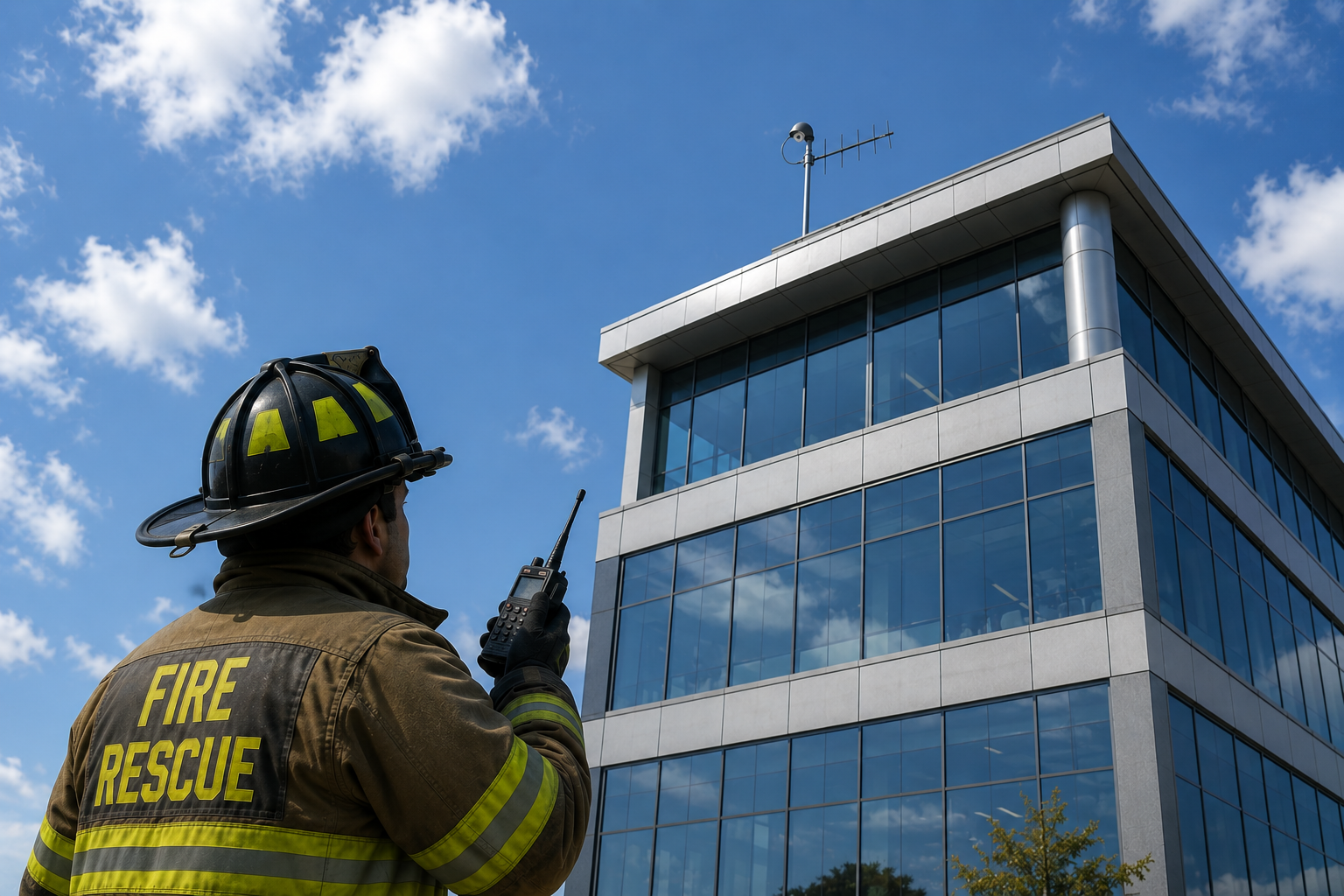
ERRCS & DAS Explained
California’s In-Building Emergency Radio Coverage Rules
Short Answer
ERRCS (Emergency Responder Radio Coverage Systems) and DAS (Distributed Antenna Systems) ensure firefighters and other first responders can use their radios reliably inside a building — including basements, stairwells, and areas where cell/radio signal normally drops out. California’s fire code requires ERRCS in many new commercial buildings, and it’s one of the more commonly missed items in permitting because it’s easy to overlook until a fire marshal flags it during inspection.
Why This Requirement Exists
Modern commercial buildings — especially those with steel construction, below-grade parking, or extensive concrete — often block or severely weaken radio signal, which historically has left firefighters unable to communicate reliably during an emergency response inside the building. ERRCS solves this by amplifying and distributing public-safety radio frequencies throughout the building via a dedicated antenna network.
How ERRCS/DAS Systems Work
- Bi-directional amplifier (BDA): Boosts the radio signal in both directions between outside and inside the building
- Distributed antenna network: Spreads the amplified signal throughout floors, stairwells, and below-grade areas
- Backup power: Required to keep the system operational during a power outage, since it’s a life-safety system
- Signal monitoring: Continuously verifies signal strength meets code-required minimums
Who Needs This
Requirements vary by jurisdiction and building characteristics, but ERRCS is commonly required for new construction over a certain size, buildings with significant below-grade space, high-rises, and renovations that trigger code compliance review. Because requirements are set at the local fire authority level on top of the state fire code, the exact trigger points vary by city and county — what’s required in one jurisdiction may not apply the same way in another.
The Permitting Trap
ERRCS is frequently missed early in a project because it isn’t always top-of-mind the way fire alarm and sprinkler systems are, and testing typically can’t happen until the building shell is substantially complete. Projects that don’t plan for ERRCS early sometimes face costly last-minute installation and testing delays right before occupancy — this is one of the more common causes of a delayed certificate of occupancy.
Getting Started
HCI Systems designs, installs, and tests ERRCS and DAS systems across California, and can help identify requirements early in a project to avoid last-minute permitting delays.
Frequently Asked Questions
How do I know if my building requires ERRCS?
It depends on your local fire authority’s requirements combined with building size, construction type, and below-grade space — a code review early in project planning is the best way to confirm before design is finalized.
When should ERRCS be planned during a construction project?
As early as possible — ideally during initial design, since retrofitting antenna pathways and BDA equipment into a finished building is far more disruptive and costly than planning for it upfront.
Is ERRCS a one-time installation, or does it require ongoing maintenance?
Most jurisdictions require periodic testing to confirm the system still meets signal-strength requirements, similar to other life-safety systems.